
The Golden Age of Replay
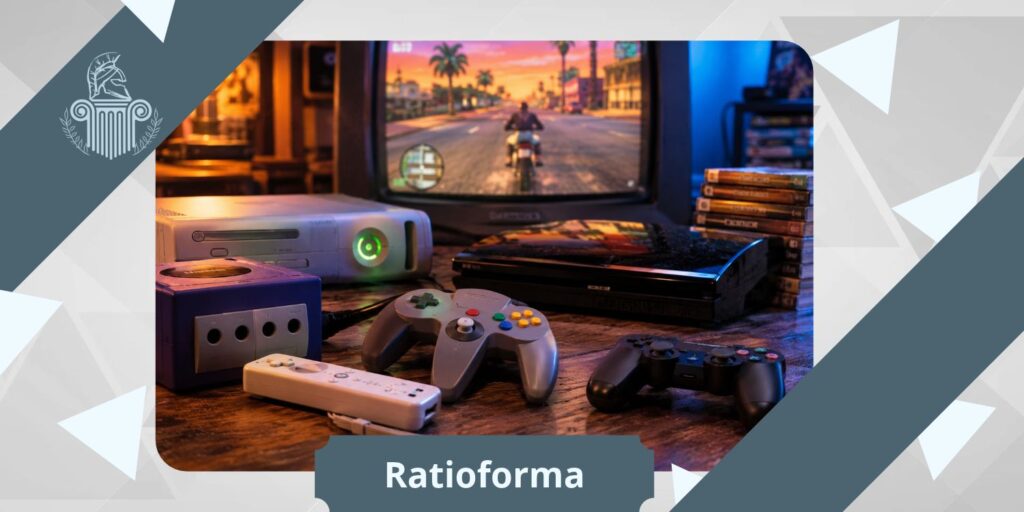
Why the 2000s Still Matter in Gaming History
The early 2000s represented an important transition for the video game industry. Home consoles became increasingly capable, computers opened new possibilities for interactive experiences, and online connectivity began transforming how people played together.
Developers were also experimenting with ideas that would later become standard across the industry. Open-world exploration, cinematic storytelling, online multiplayer communities, physics-based puzzles, and motion-controlled experiences gained significant attention.
However, technological progress wasn’t the only reason this decade became so memorable.
Many studios were willing to take creative risks. Instead of following established formulas, they introduced unusual characters, unexpected settings, and gameplay systems that encouraged players to experiment.
Another important characteristic was variety. Someone interested in racing could find an entirely different experience from someone who preferred simulation, horror, strategy, or adventure.
Consequently, the decade produced games that appealed to very different audiences. Some offered hundreds of hours of exploration, while others delivered relatively short experiences that remained memorable long after the final credits.
What Makes an Old Game Worth Playing Again?
Nostalgia certainly helps, but it cannot explain everything. A game may remind someone of childhood and still become frustrating after a few minutes.
The classics that remain entertaining usually have qualities that work independently of technological limitations.
Here are some of the most important characteristics:
- Strong gameplay foundations: The basic mechanics remain enjoyable without requiring impressive graphics.
- Recognizable identities: Characters, environments, music, and visual styles make each production distinctive.
- Freedom of experimentation: Players can discover different approaches instead of following a single rigid path.
- Memorable soundtracks: Music and sound effects create emotional connections that often last for decades.
- Replay possibilities: Different challenges, hidden details, and alternative experiences encourage repeated visits.
- Creative storytelling: Interesting situations and characters can remain compelling even when visual technology evolves.
Perhaps the greatest achievement of these games is their ability to entertain without depending entirely on technological novelty.
A Collection of Classics Worth Revisiting
Before exploring individual experiences, it helps to look at how different the most memorable games of the decade were.
Some encouraged creativity, others focused on competition, and several introduced completely new ways of interacting with digital environments.
The following selection highlights different genres and the original experiences they brought to players.
| Game | Original Release | Main Experience | Original Platform |
|---|---|---|---|
| The Sims 2 | 2004 | Life simulation | PC |
| Grand Theft Auto: San Andreas | 2004 | Open-world action | PlayStation 2 |
| World of Warcraft | 2004 | Online fantasy adventure | PC/Mac |
| Halo 2 | 2004 | Science-fiction shooter | Xbox |
| Resident Evil 4 | 2005 | Survival horror | GameCube |
| Shadow of the Colossus | 2005 | Artistic adventure | PlayStation 2 |
| Wii Sports | 2006 | Motion-controlled sports | Wii |
| Portal | 2007 | Physics-based puzzles | PC |
| Super Mario Galaxy | 2007 | 3D platform adventure | Wii |
| BioShock | 2007 | Narrative-driven shooter | PC/Xbox 360 |
| Call of Duty 4: Modern Warfare | 2007 | Military action | Multiple platforms |
| Minecraft Classic | 2009 | Creative sandbox | PC |
These releases demonstrate how many different directions developers explored during the decade.
Virtual Worlds That Never Stop Being Interesting
Some games become special because they offer more than a sequence of missions. They create environments that players genuinely enjoy visiting.
The 2000s introduced several remarkable examples of this approach.
1. The Sims 2: Everyday Life Becomes an Adventure
Released in 2004, The Sims 2 transformed ordinary situations into surprisingly entertaining experiences.
Instead of controlling a traditional hero, players managed virtual people with individual personalities, relationships, ambitions, and needs.
The basic idea was simple: create characters, build homes, develop relationships, and watch everyday situations unfold.
However, the possibilities extended much further.
A seemingly ordinary family could experience unexpected romance, complicated friendships, unusual career decisions, and generations of changing relationships.
One particularly interesting feature was the introduction of distinct life stages and genetic inheritance. Children could inherit physical characteristics from their parents, adding another layer to family creation.
The game also encouraged experimentation through its building tools and customization options.
Players could spend an entire afternoon designing a house without progressing through any traditional objective. Others preferred creating complicated family stories or introducing unexpected situations into their neighborhoods.
That flexibility remains one of its strongest qualities.
There wasn’t a single correct way to enjoy The Sims 2. Every player could build an experience around personal creativity.
EA revisited the series’ earlier history in 2025 by bringing The Sims and The Sims 2 back through a special anniversary bundle, demonstrating the continued interest in these classic experiences.
2. Grand Theft Auto: San Andreas: A World Full of Possibilities
Few games from the decade created a sense of freedom quite like Grand Theft Auto: San Andreas.
Released in October 2004, the game introduced players to Carl Johnson, known as CJ, who returns to Los Santos after spending several years away.
His journey gradually develops into a much larger adventure involving family relationships, rival groups, dangerous situations, and conflicts across the fictional state of San Andreas.
What made the experience particularly impressive was the scale of its environment.
Instead of concentrating everything within one city, the game featured three major urban areas connected by extensive countryside and smaller locations.
Players could explore Los Santos, visit San Fierro, travel to Las Venturas, and discover numerous activities along the way.
There was also plenty to do outside the main storyline.
Some popular possibilities included:
- Customizing vehicles and experimenting with different transportation options.
- Visiting gyms and developing CJ’s physical abilities.
- Buying properties and exploring different locations.
- Participating in races and optional challenges.
- Changing clothing and experimenting with personal appearance.
- Discovering hidden locations and unexpected activities.
Even today, San Andreas offers something many modern games sometimes struggle to reproduce: the feeling that an entire world is waiting to be explored.
Its visual presentation may show its age, but the freedom to create personal adventures remains remarkably entertaining.
Rockstar’s official game page preserves the original premise and confirms its October 26, 2004 release date.
3. World of Warcraft: An Adventure Shared With Millions
When World of Warcraft arrived in November 2004, it introduced players to a persistent fantasy world filled with quests, creatures, locations, and opportunities for cooperation.
Unlike traditional single-player adventures, this experience encouraged people to explore alongside other participants.
Players created characters, selected fantasy races and classes, completed missions, collected equipment, and gradually developed their abilities.
However, the social aspect was equally important.
Guilds allowed people to organize activities, while group challenges encouraged cooperation between characters with different abilities.
The world of Azeroth also provided an enormous sense of discovery.
Players could explore forests, deserts, frozen landscapes, mysterious ruins, and dangerous dungeons. Every location had its own atmosphere and potential challenges.
For many participants, the most memorable moments weren’t necessarily connected to completing difficult missions.
They were about meeting other players, discovering unexpected places, and experiencing major adventures together.
World of Warcraft helped establish an online gaming culture that influenced numerous productions in the following years.
Blizzard’s official historical timeline identifies November 2004 as the game’s original launch period.
4. Minecraft: The Beginning of an Endless Creative Playground
Although Minecraft is usually associated with the following decade, its origins belong to the final months of the 2000s.
Its first public PC version appeared in 2009, while the complete release arrived in 2011.
The original concept was remarkably straightforward: explore a world made of blocks, collect materials, and use them to construct different objects and environments.
Yet this simple foundation created an extraordinary number of possibilities.
Players could build houses, underground shelters, enormous castles, farms, bridges, and entire fictional cities.
There was also an exploration component involving caves, resources, environmental challenges, and hostile creatures.
What truly made Minecraft different was the absence of a rigid path.
Players weren’t constantly instructed to follow a specific objective. Instead, they could decide what they wanted to accomplish.
One person might spend hours constructing a detailed medieval village, while another preferred exploring underground environments or experimenting with survival mechanics.
Minecraft’s official website confirms its 2009 beginnings and describes its open-world sandbox structure.
Why These Virtual Worlds Still Deserve Attention
The games above demonstrate that an engaging environment doesn’t necessarily need photorealistic graphics or enormous technical complexity.
Sometimes, a well-designed world is enough to keep players interested.
Consider the different reasons people return to these experiences:
| Game | Main Attraction | What Encourages Replay |
|---|---|---|
| The Sims 2 | Personal stories and relationships | Creating different families |
| San Andreas | Open-world freedom | Exploring new activities and locations |
| World of Warcraft | Shared adventures | Character development and cooperation |
| Minecraft | Creative freedom | Building and discovering new possibilities |
Each production offers a different type of entertainment.
Nevertheless, they share an important quality: players have considerable freedom to create their own experiences.

Action, Competition, and Unforgettable Stories
While open-world adventures dominated part of the decade, other games became classics because of their intense action, carefully designed challenges, and memorable storytelling.
Some of these releases also influenced how entire genres developed.
5. Halo 2: A Defining Science-Fiction Adventure
Released in November 2004, Halo 2 continued the story of Master Chief and humanity’s conflict with the Covenant.
The game expanded the universe introduced in Halo: Combat Evolved, offering new environments, weapons, characters, and narrative developments.
One particularly interesting decision was allowing players to experience parts of the campaign through the perspective of the Arbiter, a Covenant character with his own motivations and conflicts.
This helped give the story another dimension.
However, Halo 2’s importance extended beyond its single-player campaign.
Its online multiplayer experience became a major attraction on the original Xbox, helping establish console-based online competition as an important part of gaming culture.
Players could compete in different multiplayer modes, develop strategies, and challenge friends through Xbox Live.
Its combination of responsive combat, memorable maps, and competitive possibilities made it especially influential.
Microsoft’s historical coverage of the game’s launch in November 2004 illustrates the enormous anticipation surrounding its arrival.
6. Half-Life 2: A Story Told Through the Environment
Half-Life 2, released in 2004, demonstrated how much storytelling could happen without constantly interrupting gameplay.
Players followed Gordon Freeman through City 17, an oppressive environment controlled by an alien authority.
Rather than relying exclusively on traditional cinematic sequences, the game allowed its world to communicate much of the story.
Characters interacted with the environment, unusual events appeared during exploration, and the atmosphere gradually revealed the situation surrounding the protagonist.
Its physics-based mechanics were another remarkable achievement.
Players could manipulate objects, solve environmental problems, and use different elements of the surroundings during encounters.
The Gravity Gun became one of the game’s most recognizable features because it transformed ordinary objects into useful interactive tools.
This created situations that were both creative and entertaining.
Half-Life 2 remains particularly interesting for players who appreciate carefully constructed environments, intelligent level design, and stories that reward attention.
7. Resident Evil 4: A New Way to Experience Survival Horror
Resident Evil 4 arrived in 2005 and introduced a significant change to the franchise.
Instead of relying primarily on the fixed camera perspectives associated with earlier entries, it adopted an over-the-shoulder perspective that placed players closer to the action.
The protagonist, Leon S. Kennedy, travels to a rural European location to investigate the disappearance of the United States president’s daughter.
However, the mission quickly becomes a dangerous struggle involving mysterious enemies and increasingly disturbing discoveries.
The game successfully combined several elements:
- Exploration through dangerous environments.
- Resource management and ammunition conservation.
- Unpredictable enemy encounters.
- Weapon upgrades and equipment customization.
- Puzzle-solving and environmental challenges.
- Action sequences balanced with moments of suspense.
One of its greatest strengths was the rhythm of the experience.
Just when players became comfortable with a particular situation, the game introduced a different challenge.
Its influence extended far beyond its original release, and Capcom continues to support the franchise with new productions and reimaginings.
The company identifies the original 2005 release as an important foundation for the modern Resident Evil 4 experience.
8. Call of Duty 4: Modern Warfare: A Different Kind of Military Action
Before Modern Warfare became an enormous gaming franchise, Call of Duty 4: Modern Warfare introduced a new direction for the series in 2007.
Rather than focusing on the historical settings of its predecessors, the game explored a contemporary military conflict.
Players experienced missions through different perspectives, following soldiers involved in a complex international crisis.
Its campaign combined cinematic sequences, varied environments, and carefully planned combat encounters.
However, multiplayer was another major reason for its lasting popularity.
The game introduced or popularized systems that became important features in subsequent shooters, including customizable weapon classes, perks, progression, and killstreak rewards.
This approach encouraged players to develop personal strategies and experiment with different equipment combinations.
Consequently, matches could feel different depending on individual choices.
Activision’s retrospective identifies November 5, 2007, as its release date and highlights several mechanics that became influential throughout the franchise.
9. BioShock: An Underwater World Filled With Mystery
BioShock, released in 2007, offered something rather different from conventional action games.
Its setting was Rapture, an underwater city originally imagined as an extraordinary society built around ambitious ideals.
However, something went terribly wrong.
Players gradually discover the history of this mysterious location while navigating abandoned buildings, dangerous corridors, and environments filled with disturbing details.
The atmosphere is one of the game’s strongest characteristics.
Its architecture, lighting, sound design, and environmental storytelling create a distinctive identity.
Combat also offers considerable variety.
Players can use conventional weapons alongside special abilities known as Plasmids, which provide different ways to interact with enemies and surroundings.
More importantly, BioShock encourages players to pay attention to the world around them.
Posters, recordings, conversations, and environmental details gradually reveal what happened in Rapture.
The result is an adventure that combines action, exploration, and philosophical questions without losing its entertainment value.
10. Shadow of the Colossus: An Adventure Built Around Giant Encounters
Not every iconic game from the 2000s depended on fast action or complicated mechanics.
Shadow of the Colossus, released for PlayStation 2 in 2005, offered a much quieter and more unusual experience.
The premise follows Wander, a young man who enters a mysterious land in search of a way to revive someone important to him.
His objective involves defeating sixteen enormous creatures known as Colossi.
However, these aren’t conventional enemies waiting to be defeated through ordinary combat.
Each encounter functions almost like an environmental puzzle.
Players must study the creature’s movements, identify weaknesses, discover how to climb its body, and determine the right moment to attack.
The immense scale of these encounters creates a special atmosphere.
The surrounding landscape is also important. Much of the world feels empty, mysterious, and distant from ordinary civilization.
This deliberate use of space makes every encounter feel significant.
Interestingly, the game doesn’t depend on constant activity to maintain interest. Its quieter moments provide room for reflection and anticipation.
Sony announced the original game’s PlayStation 2 release on October 18, 2005, describing its journey through a mysterious land populated by sixteen gigantic creatures.
The Classics That Changed How We Play
The 2000s weren’t defined exclusively by large adventures and intense combat.
Several games became cultural phenomena because they introduced accessible mechanics, encouraged social interaction, or transformed relatively simple concepts into unforgettable entertainment.
Here is another way to understand their appeal:
| Game | Main Gameplay Idea | Lasting Appeal |
|---|---|---|
| Halo 2 | Science-fiction combat | Competitive multiplayer |
| Resident Evil 4 | Survival and resource management | Suspenseful encounters |
| Call of Duty 4 | Modern military action | Progression and competition |
| BioShock | Exploration and combat | Atmosphere and storytelling |
| Shadow of the Colossus | Climbing gigantic creatures | Unique encounters and emotion |
These productions demonstrate that a memorable gaming experience can emerge from very different design philosophies.
Simple Ideas That Became Extraordinary Experiences
Some of the most recognizable games of the decade didn’t need enormous worlds or complicated systems.
Instead, they focused on a central idea and developed it exceptionally well.
11. Wii Sports: Bringing Everyone Into the Game
When Nintendo introduced the Wii in 2006, its motion-sensitive controller created a different way to interact with video games.
Wii Sports became one of the clearest demonstrations of this approach.
The collection featured simplified versions of several sports, including tennis, bowling, baseball, boxing, and golf.
Instead of relying entirely on traditional button combinations, players used physical gestures to perform different actions.
This made the experience easier to understand, even for people with little previous gaming experience.
Someone who had never owned a console could quickly understand the basic idea of swinging a virtual tennis racket or rolling a bowling ball.
Its greatest strength was accessibility.
Families, friends, and visitors could gather around the television and participate without spending hours learning complicated controls.
The Strong National Museum of Play describes Wii Sports as an important example of how Nintendo helped bring video games to a wider audience through motion-controlled interaction.
Revisiting the 2000s: An Experience Worth Repeating
Looking back at the video games released during the 2000s is almost like opening a collection of different creative experiments.
The decade offered virtual neighborhoods, enormous cities, fantasy universes, underwater mysteries, musical competitions, and adventures across distant galaxies.
More importantly, these experiences demonstrated that video games could entertain people in countless different ways.
Some invited players to create their own stories. Others challenged them to solve difficult puzzles, cooperate with friends, or explore environments filled with unexpected discoveries.
Their continued appeal also reminds us that great games don’t necessarily need to follow the latest technological trends.
Sometimes, a clever idea, a recognizable personality, and enjoyable mechanics are enough to create something that lasts.
Whether you’re returning to a familiar adventure or discovering one of these classics for the first time, the 2000s offer plenty of reasons to pick up a controller again.
After all, some games don’t need to become newer to remain special.
Credits: Game Area 101
See more here!