
How AI Turns Questions Into Answers
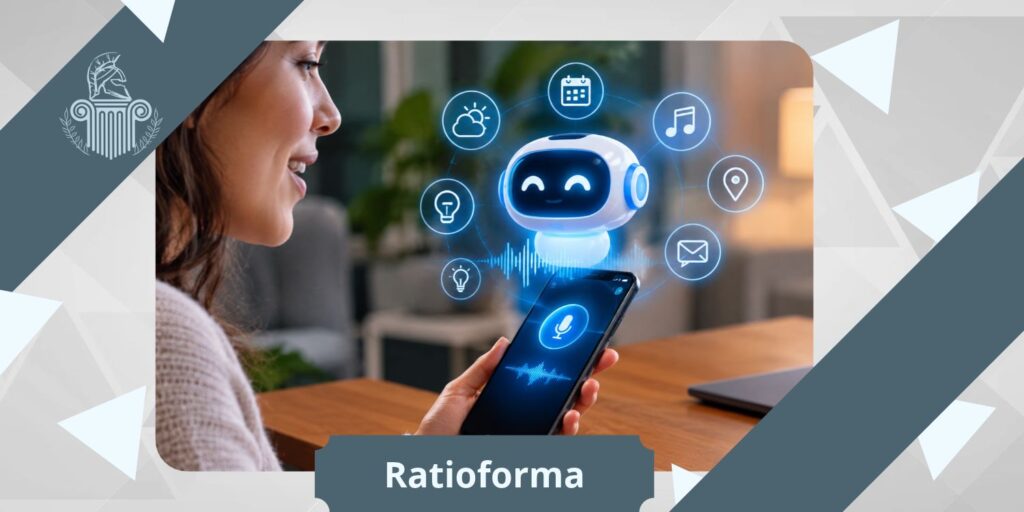
Virtual assistants have become an important part of modern digital life. Whether answering questions, organizing schedules, controlling smart devices, or helping users find information, these technologies are changing the way people interact with computers.
However, have you ever wondered what happens behind the screen when you ask a virtual assistant a question? How can a smartphone understand spoken words, recognize intentions, and provide useful answers within seconds?
The explanation involves several technologies working together. Artificial intelligence, language processing, machine learning, and cloud computing all contribute to making these digital assistants increasingly capable.
In this guide, we will explore how virtual assistants and artificial intelligence work, what technologies make them possible, where they are used, and how they may influence everyday activities in the coming years.
1. What Are Virtual Assistants?
A virtual assistant is a software-based tool designed to interact with people and help them complete different tasks. Unlike traditional applications that require users to navigate menus and select specific commands, virtual assistants can understand requests expressed through text or speech.
For example, someone can ask an assistant about tomorrow’s weather, request directions, create a reminder, or search for information without manually opening several applications.
These systems use different technologies to interpret instructions and determine what action should happen next.
Some virtual assistants operate mainly through predefined commands, while more advanced solutions use artificial intelligence to understand context, recognize different expressions, and generate personalized responses.
Popular examples include:
- Siri: Apple’s virtual assistant, designed to help users interact with Apple devices and services.
- Google Assistant: Google’s assistant, developed to respond to voice commands and perform everyday tasks.
- Amazon Alexa: A voice-based assistant commonly associated with smart speakers and connected home devices.
- Microsoft Copilot: An AI-powered assistant that helps with information searches, productivity, and creative activities.
- ChatGPT: An AI assistant capable of understanding questions, generating text, explaining concepts, and supporting various activities.
Although these tools share similar characteristics, their capabilities and underlying technologies can be quite different.
2. How Does Artificial Intelligence Make Assistants Work?
Artificial intelligence is one of the main technologies behind modern virtual assistants. It allows software to perform tasks that traditionally required certain human abilities, such as recognizing language, identifying patterns, and interpreting information.
Instead of following only a fixed list of commands, AI-powered systems can analyze information and produce responses based on what they have learned.
For instance, consider someone asking, “Can you recommend something interesting to watch tonight?”
A traditional command-based application might not understand this sentence because it does not correspond to a predefined instruction.
An AI-powered assistant, however, can recognize that the person is requesting entertainment recommendations and generate a relevant response.
This process involves several important components:
Machine Learning: This technology allows computer systems to identify patterns in information and improve their performance through training.
Natural Language Processing: Commonly called NLP, this field focuses on helping computers understand, interpret, and generate human language.
Natural Language Understanding: This component helps identify the meaning, intention, and relationships within a user’s message.
Generative AI: This technology can create new content, including explanations, summaries, images, and written responses.
Together, these technologies allow virtual assistants to provide more flexible interactions than traditional software.
Table 1: Main Technologies Behind Virtual Assistants
| Technology | Main Function | Practical Example |
|---|---|---|
| Artificial Intelligence | Enables intelligent software behavior | Understanding requests |
| Machine Learning | Identifies patterns in data | Improving recommendations |
| Natural Language Processing | Works with human language | Interpreting questions |
| Speech Recognition | Converts spoken words into text | Understanding voice commands |
| Generative AI | Produces new content | Creating explanations |
| Cloud Computing | Provides remote processing resources | Handling complex requests |
Each component contributes differently. Nevertheless, their combination makes modern assistants more versatile and useful.
3. How Do Virtual Assistants Understand Human Speech?
One of the most interesting features of virtual assistants is their ability to understand spoken language.
When someone speaks to a compatible device, the system needs to transform an audio signal into information that software can interpret.
This process generally involves several stages.
Step 1: Audio Capture
First, the microphone captures the user’s voice and converts the sound into digital information.
Depending on the device, the system may also use background noise reduction to improve audio quality.
Step 2: Speech Recognition
Next, speech recognition technology analyzes the audio and attempts to identify the spoken words.
This technology is commonly known as Automatic Speech Recognition, or ASR.
For example, when someone says, “Set an alarm for seven in the morning,” the system attempts to convert that sentence into written text.
Step 3: Language Interpretation
After recognizing the words, the assistant analyzes their meaning.
It identifies important elements, such as the requested action, the time mentioned, and the relationship between the different words.
Step 4: Action Selection
The software then determines what should happen.
In this example, the assistant identifies that the user wants to create an alarm rather than simply receive information about a specific time.
Step 5: Response Generation
Finally, the assistant confirms the action through text, speech, or another interface.
Not every assistant follows exactly the same sequence. However, these stages illustrate how spoken instructions become practical actions.
4. What Happens When You Ask an AI a Question?
AI-powered assistants use more advanced processes when responding to open-ended questions.
Unlike simple voice commands, these interactions may require interpreting context, connecting different concepts, and generating completely new sentences.
Large Language Models, commonly called LLMs, play an important role in this process.
These models are trained using extensive collections of text and other information, allowing them to recognize linguistic patterns and relationships between words.
When a user submits a question, the system processes the information and calculates which sequence of words is likely to produce a relevant response.
However, this does not mean that the AI thinks exactly like a human being.
Instead, it uses mathematical models and computational processes to interpret input and generate output.
For example, imagine asking an assistant:
“Why do some applications consume more battery than others?”
The system can identify several related concepts:
- Applications running in the background.
- Frequent internet connections.
- Location tracking.
- Intensive graphics processing.
- Continuous synchronization.
- Access to device sensors.
It can then organize these concepts into an explanation that addresses the original question.
The result may look like a natural conversation, even though the underlying process involves complex calculations.
5. Different Types of Virtual Assistants and AI Tools
Not every virtual assistant is designed to perform the same activities.
Some focus on simple commands, while others provide more sophisticated conversational experiences.
Understanding these differences helps users choose the right technology for their needs.
Voice-Controlled Assistants
These assistants primarily interact through spoken instructions.
They are commonly integrated into smartphones, smart speakers, televisions, and connected household devices.
Typical activities include:
- Setting alarms and reminders.
- Playing music.
- Checking weather conditions.
- Making calls.
- Controlling compatible smart devices.
- Answering basic questions.
Conversational AI Assistants
Conversational assistants are designed to maintain more flexible interactions.
Instead of responding only to individual commands, they can process longer questions and understand additional information provided during a conversation.
For example, a user might first ask about popular tourist destinations and then request recommendations specifically for families.
The assistant can use the previous discussion to make the next response more relevant.
Productivity Assistants
These tools focus on helping people manage everyday responsibilities.
Depending on their integrations and permissions, they may support activities such as:
- Organizing meetings.
- Summarizing documents.
- Drafting emails.
- Creating task lists.
- Searching through information.
- Preparing presentations.
Specialized AI Assistants
Some assistants are developed for specific purposes rather than general conversations.
Examples include tools for language learning, programming assistance, customer support, financial organization, and creative projects.
Table 2: Comparing Different Assistant Categories
| Assistant Type | Main Purpose | Common Applications |
|---|---|---|
| Voice Assistant | Execute spoken commands | Smartphones and smart speakers |
| Conversational AI | Understand complex questions | Research and explanations |
| Productivity Assistant | Support daily work | Emails and scheduling |
| Educational Assistant | Help with learning | Languages and mathematics |
| Creative Assistant | Support content creation | Writing and brainstorming |
| Specialized Assistant | Perform specific activities | Programming and customer service |
Although these categories sometimes overlap, each one offers different advantages depending on the user’s objectives.
6. How Do AI Assistants Learn and Improve?
Machine learning is an essential part of many modern AI systems.
During development, machine learning models are trained using large datasets that help them identify patterns, relationships, and structures within information.
However, the process is more sophisticated than simply memorizing individual examples.
For language models, training involves learning statistical relationships between words and other elements of language.
As a result, these systems can generate responses to questions they have never encountered in exactly the same form.
Developers may also use additional training techniques to improve response quality, instruction following, and safety.

Some important approaches include:
Supervised Learning: Models learn from examples that contain information or desired outputs provided during training.
Reinforcement Learning: Systems are optimized using feedback or reward signals that encourage certain behaviors.
Human Feedback: People can evaluate responses and help developers identify areas that require improvement.
Nevertheless, an important distinction must be made: many AI assistants do not automatically learn from every conversation in real time.
Depending on the product and its settings, user interactions may or may not be used to improve future models.
Therefore, the way an assistant learns depends on its architecture, development process, and privacy policies.
7. Where Are Virtual Assistants Used Today?
Virtual assistants are no longer limited to smartphones and smart speakers.
They are increasingly integrated into different industries, digital services, and everyday environments.
This expansion is possible because AI technologies can be adapted to support many types of activities.
In Education
AI assistants can explain difficult concepts, generate practice questions, summarize educational materials, and help students explore unfamiliar subjects.
For example, someone learning a new language can use conversational tools to practice vocabulary and understand grammatical structures.
In Healthcare
Some digital assistants help users organize appointments, find general health information, and navigate administrative services.
However, they should not replace qualified medical professionals or be treated as definitive sources of diagnosis.
In Customer Service
Businesses use automated assistants to answer common questions, provide information about orders, and guide customers through support procedures.
Consequently, customers may receive assistance without waiting for a human representative.
In Smart Homes
Connected assistants can interact with compatible devices, allowing users to control lighting, thermostats, speakers, and other household equipment.
In Transportation
AI-powered systems can support navigation, provide traffic information, and improve certain vehicle functions.
In Professional Environments
Companies increasingly use AI assistants to organize information, summarize documents, support research, and automate repetitive activities.
8. What Technologies Allow Assistants to Perform Actions?
Understanding language is only part of the process.
To complete practical tasks, virtual assistants often need access to additional software, services, and connected devices.
This is where integrations and application programming interfaces become important.
An API, or Application Programming Interface, allows different software systems to communicate and exchange information according to defined rules.
For example, when a user asks an assistant to check the weather, the assistant may connect to a weather service through an API.
The service provides the requested information, which the assistant can then organize into a readable response.
Other integrations may connect assistants to:
- Calendar applications.
- Music streaming platforms.
- Navigation services.
- Smart home systems.
- Online databases.
- Email platforms.
- Productivity software.
In addition, cloud computing provides remote processing resources that allow many AI services to handle demanding tasks without relying exclusively on the user’s device.
Some operations can also happen locally, directly on smartphones or computers.
This combination of local processing and cloud infrastructure helps developers balance performance, connectivity, privacy, and resource consumption.
9. Are Virtual Assistants Always Accurate?
Despite their impressive capabilities, virtual assistants are not perfect.
One important limitation is that AI-generated answers can sometimes contain incorrect information.
In generative AI, this problem is frequently associated with a phenomenon known as hallucination.
It occurs when a model produces information that sounds convincing but is inaccurate, unsupported, or entirely fabricated.
For example, an assistant might provide an incorrect historical date, invent a reference, or misunderstand a technical question.
Other limitations include:
- Difficulty understanding unclear speech.
- Problems interpreting unusual expressions.
- Limited access to current information.
- Incorrect assumptions about user intentions.
- Incomplete understanding of complex situations.
- Dependence on available integrations and permissions.
Furthermore, some assistants may misunderstand questions containing multiple instructions or ambiguous wording.
Therefore, important information should always be checked against reliable sources.
This is especially relevant when dealing with financial decisions, legal matters, health information, and other subjects that require accuracy.
10. Privacy and Security: What Should Users Know?
Virtual assistants often interact with microphones, personal accounts, location information, calendars, and other sensitive resources.
Consequently, understanding privacy settings is essential.
Different products collect and process different types of information, depending on their features and configuration.
Some systems process certain commands directly on the device, while others send information to remote servers for additional processing.
Before using an assistant, users should consider several precautions.
Review Microphone Permissions
Check which applications can access the microphone and whether that permission is necessary.
Understand Data Collection
Read the service’s privacy policy to understand what information may be collected, stored, or used.
Limit Unnecessary Permissions
Avoid granting access to contacts, location, photographs, or other resources unless the feature genuinely requires it.
Protect Personal Accounts
Use strong passwords and additional authentication methods whenever available.
Avoid Sharing Sensitive Information
Do not casually submit passwords, financial credentials, identification documents, or other confidential information to conversational assistants.
Additionally, remember that privacy controls vary between platforms.
A feature available in one application may work differently in another, so reviewing individual settings is always worthwhile.
11. What Is the Difference Between Traditional Software and AI Assistants?
Traditional applications generally operate through predefined instructions, menus, and programmed rules.
Although they can perform complicated activities, their behavior is often restricted to specific functions established by developers.
AI assistants introduce another way of interacting with software.
They can interpret natural language, identify patterns, and generate responses that are not limited to a single predefined sentence.
Consider the following comparison:
| Feature | Traditional Software | AI Assistant |
|---|---|---|
| Interaction | Menus and predefined commands | Natural language and commands |
| Responses | Usually predetermined | Can generate new responses |
| Adaptability | Often limited to programmed functions | Can interpret different expressions |
| Context | Depends on application design | May consider conversation history |
| Creativity | Usually follows predefined operations | Can generate creative content |
| Limitations | Restricted by programmed capabilities | May produce inaccurate information |
However, traditional software remains extremely important.
In fact, many AI assistants depend on conventional applications, databases, and programming systems to perform their activities.
The two technologies are not necessarily competitors. Instead, they frequently work together.
12. The Future of Virtual Assistants and Artificial Intelligence
Virtual assistants are likely to become increasingly integrated into everyday digital experiences.
As AI models improve, interactions may become more natural, contextual, and capable of handling several related activities.
One important development is the expansion of AI agents.
Unlike assistants that primarily respond to questions, AI agents can be designed to plan and execute sequences of actions toward a particular objective.
For example, a digital agent might help organize a trip by comparing destinations, identifying transportation options, and preparing an itinerary.
However, the actual actions it can perform depend on its available tools, permissions, and integrations.
Other developments may include:
More Personalized Experiences: Assistants may become better at adapting explanations and recommendations to individual preferences.
Improved Voice Interactions: Advances in speech recognition and generation may make conversations feel more natural.
Better Device Integration: AI could become more deeply connected to computers, smartphones, vehicles, and household equipment.
Multimodal Capabilities: Assistants may increasingly interpret combinations of text, images, audio, and video.
Greater Local Processing: More powerful devices may perform additional AI operations without constantly relying on remote servers.
Nevertheless, these developments also introduce challenges involving privacy, security, reliability, and responsible use.
The future of AI will depend not only on making assistants more powerful but also on ensuring that people can use them safely and understand their limitations.
Credits: Science Simplified 4 All
See more here! Also check out our categories!